
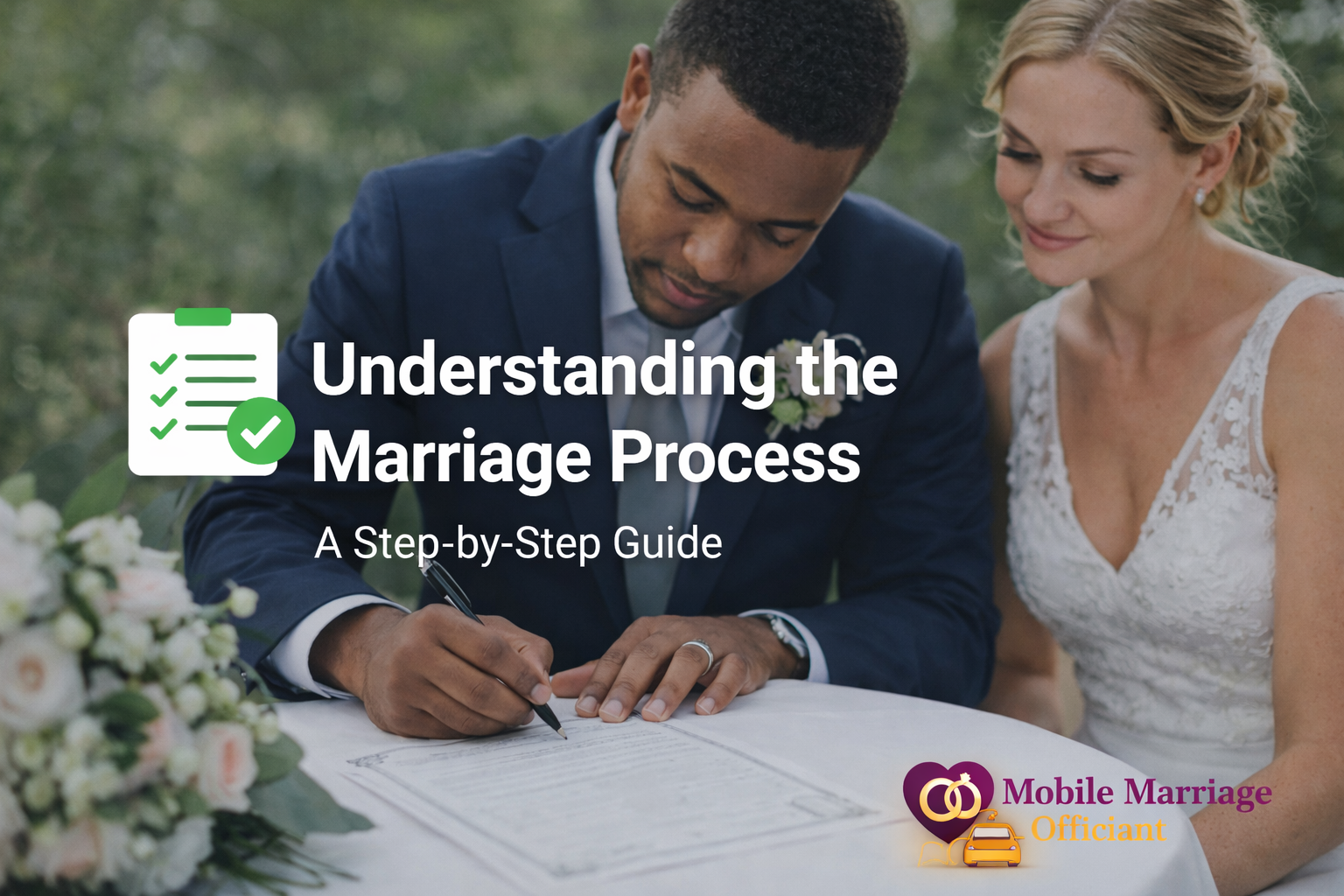
Getting married is an exciting milestone, but the legal marriage process can feel confusing if you’re not sure where to start. From obtaining your marriage license to completing your ceremony, understanding each step helps ensure everything goes smoothly on your special day.
At Mobile Marriage Officiant, we guide couples through the entire process, making marriage simple, stress-free, and legally binding. Below is a clear breakdown of how the marriage process works.
Step 1: Obtain a Marriage License
Before any ceremony can take place, both parties must obtain a marriage license from the county clerk’s office. Requirements vary by state and county, but typically include:
- Valid government-issued photo identification
- Both parties appearing together (in most cases)
- Payment of the marriage license fee
Some counties offer same-day licenses, while others may require appointments. The marriage license must be valid on the day of your ceremony.
Step 2: Choose a Licensed Wedding Officiant
A legal marriage ceremony must be performed by an authorized individual. This includes a licensed wedding officiant, judge, or other legally recognized official.
Choosing a professional officiant ensures:
- Your ceremony meets all legal requirements
- The marriage certificate is completed correctly
- The process is handled professionally and on time
A mobile wedding officiant offers flexibility by coming to your chosen location, whether it’s a courthouse, private venue, or outdoor setting.
Step 3: Plan Your Ceremony Details
Once your license and officiant are secured, it’s time to plan the ceremony. This includes:
- Selecting a ceremony style (simple, traditional, or personalized)
- Choosing vows (standard or custom)
- Deciding on location, date, and time
At Mobile Marriage Officiant, we work closely with couples to tailor each ceremony to their preferences while keeping everything legally compliant.
Step 4: Conduct the Marriage Ceremony
On the wedding day, your officiant will conduct the ceremony, ensuring:
- Both parties verbally consent
- Required declarations are made
- Witnesses sign if required by law
Whether it’s a quick elopement or an intimate gathering, the ceremony officially joins you in marriage.
Step 5: Filing the Marriage Certificate
After the ceremony, the officiant completes and files the marriage certificate with the appropriate county office. This step is crucial, as your marriage is not legally recognized until the certificate is properly recorded.
Once processed, you can request certified copies for name changes, insurance, and other legal purposes.
Why Work With a Mobile Marriage Officiant?
Working with a professional mobile wedding officiant helps avoid common mistakes, delays, or filing issues. We provide:
- Clear guidance through every step
- Flexible scheduling, including same-day and last-minute weddings
- Professional handling of legal documents
- Personalized ceremonies tailored to your love story
Our goal is to make the marriage process easy, seamless, and memorable.
Ready to Get Married?
If you’re planning a wedding, elopement, or courthouse-style ceremony, Mobile Marriage Officiant is here to help. From the first question to the final signature, we guide you every step of the way.
👉 Contact us today to schedule your officiant and start your marriage journey with confidence.